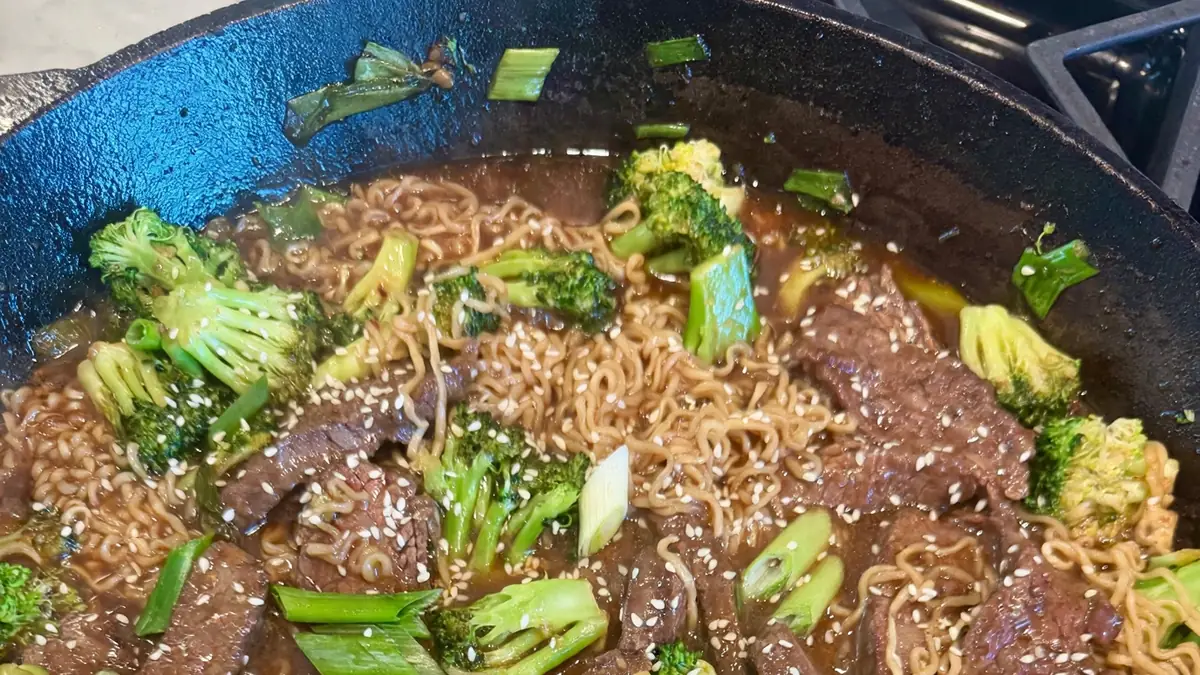
Takeout Mongolian beef is good. This version is better, and it comes together in one pan in your own kitchen. Thinly sliced flank steak gets coated in cornstarch and seared until caramelized at the edges, then tossed with broccoli and ramen noodles in a savory sauce.
This mongolian beef and noodles dinner is ready in 25 minutes, with just 10 minutes of prep. The sauce is built from soy sauce, brown sugar, fresh ginger, garlic and sesame oil. It clings to every strand of noodle and every piece of beef.
What is One-Pan Mongolian Beef and Noodles?
One-Pan Mongolian Beef and Noodles is a one-pan take on takeout Mongolian beef, with ramen noodles and broccoli cooked right in. The cornstarch coating gives the beef a thin, slightly crispy crust, so the glossy sauce has something to cling to.
This mongolian beef and noodles dinner is all about the sear. A hot pan, dry beef and working in batches are what separate it from a dull, steamed-looking stir fry. The noodles soak up the sauce and the broccoli stays bright and tender-crisp.
Key Ingredients
Here is what you need for One-Pan Mongolian Beef and Noodles.
- Flank Steak: Two pounds of flank steak, sliced as thinly as possible against the grain. Thin slices cook fast and stay tender in this mongolian beef and noodles.
- Cornstarch: Two tablespoons coat the beef before searing to create the caramelized, clingy crust. A little extra mixed with water can thicken the sauce at the end.
- Kinder’s Buttery Steakhouse Seasoning: One tablespoon adds rich, savory depth to the beef.
- Ramen Noodles: Two packs of ramen noodles, with the seasoning packets discarded. The noodles are perfect for soaking up the sauce in mongolian beef and noodles.
- Broccoli Florets: One bag of broccoli florets, cooked just until bright green and tender-crisp.
- Green Onions: Half a bunch, sliced, for topping and a fresh bite.
- Soy Sauce or Tamari: Half a cup forms the base of the sauce. Use tamari for a gluten-free version.
- Brown Sugar: Half a cup balances the soy sauce and makes the sauce glossy and slightly sticky.
- Fresh Ginger: Two tablespoons, grated or minced. Fresh is strongly preferred over ground.
- Minced Garlic: One tablespoon adds savory depth to the sauce.
- Warm Water: A quarter cup thins the sauce and helps the sugar dissolve.
- Sesame Oil: One tablespoon adds a nutty, toasty finish.
- Sesame Seeds: A sprinkle on top for garnish.
How to Make One-Pan Mongolian Beef and Noodles
- Coat the beef. Slice the flank steak as thinly as possible against the grain. If it is hard to slice, freeze it for 20 to 30 minutes first to firm it up. Toss the beef with cornstarch, salt, pepper and seasoning until evenly coated.
- Make the sauce. Whisk the soy sauce, brown sugar, grated ginger, minced garlic, warm water and sesame oil in a bowl until the sugar dissolves. Set aside.
- Sear the beef. Heat a thin layer of oil in a large skillet or wok over medium-high heat until shimmering. Add the coated beef in a single layer, working in batches. Cook 2 to 3 minutes per side until deeply browned with slightly crispy edges. Remove and set aside.
- Cook the broccoli. In the same pan over medium heat, cook the broccoli for 3 to 4 minutes until bright green and tender-crisp, stirring occasionally. A small splash of water, covered for 1 to 2 minutes, helps steam it through.
- Cook the noodles. While the broccoli cooks, prepare the ramen noodles according to package directions. Discard the seasoning packets and drain. Do not rinse them, as the surface starch helps the sauce cling.
- Build the dish. Return the beef to the pan with the broccoli. Pour the sauce over everything and toss to coat. Simmer 2 to 3 minutes until the sauce thickens and clings to the beef. For a thicker sauce, stir in 1 tablespoon of cornstarch mixed with a splash of water and cook 30 to 60 seconds more until glossy.
- Add the noodles. Add the drained noodles to the pan and toss until everything is coated in sauce and evenly mixed.
- Garnish and serve. Top with green onions and sesame seeds. Serve immediately straight from the pan.
What to Serve With One-Pan Mongolian Beef and Noodles
Serve this mongolian beef and noodles straight from the pan, topped with sliced green onions and a generous sprinkle of sesame seeds. It is a full meal on its own, so it needs nothing else on the side.
If you love one-pan dinners, try our Easy one pan taco mac and cheese next. A simple cucumber salad also works if you want something fresh alongside it.
How to Store One-Pan Mongolian Beef and Noodles
Store leftovers in an airtight container in the refrigerator for up to 4 days. The noodles will absorb more sauce as they sit, which deepens the flavour, so add a small splash of soy sauce or water when reheating to loosen everything back up.
Reheat in a skillet over medium heat with a splash of water or soy sauce, tossing often until heated through. The microwave also works on medium power in 60-second intervals, stirring between each. This dish does not freeze well, since the noodles turn mushy.
Recipe Tips for Success!
These tips will help your mongolian beef and noodles turn out perfectly every time.
- Slice the beef thinly: Slice as thinly as possible against the grain. Freeze the steak for 20 to 30 minutes first if it is hard to slice.
- Do not crowd the pan: Sear the beef in a single layer, working in batches. Crowding makes the beef steam instead of sear, and you lose the crust.
- Have the sauce ready: Whisk the sauce together before the beef hits the pan. Once cooking starts, everything moves fast.
- Do not rinse the noodles: Leave the starch on the noodles after draining. It helps the sauce cling to every strand.
- Thicken the sauce if you like: Mix 1 tablespoon of cornstarch with a small splash of water and stir it into the pan. Cook for another 30 to 60 seconds until the sauce turns glossy and thick.
- Serve it right away: Serve it right away, straight from the pan, while the beef is crisp at the edges and the noodles are saucy.
Recipe FAQs
Can I make mongolian beef and noodles gluten-free?
Yes. Use tamari instead of soy sauce and gluten-free ramen noodles. Everything else is naturally gluten-free.
What if my sauce is too thin?
Mix 1 tablespoon of cornstarch with a small splash of water and stir it into the pan. Cook for another 30 to 60 seconds until the sauce turns glossy and thick.
Can I use a different cut of beef?
Flank steak is the best choice here because it slices thinly and stays tender. Slice it as thinly as possible against the grain for the best result.
Can I make this ahead of time?
It is best served fresh, straight from the pan. Leftovers keep in the fridge for up to 4 days, but add a splash of water or soy sauce when reheating, since the noodles soak up sauce as they sit.
Variations & Substitutions
Use tamari instead of soy sauce to make it gluten-free. For a thicker, glossier sauce, stir in the cornstarch slurry at the end. Add extra broccoli or green onions if you like more vegetables.